
Pain, weakness, or a feeling that your thumb is unreliable during gripping or pinching can point to thumb joint instability, a condition that affects everyday function and performance if not addressed early. Tasks such as opening jars, lifting objects, typing, or training can become uncomfortable or uncertain. At Adam Vital Physiotherapy & Rehabilitation Center, our approach to Wrist & Hand Physiotherapy focuses on identifying why the thumb joint is unstable, restoring control and strength, and guiding you through a structured plan that protects the joint while rebuilding confident use.
What thumb joint instability means
Thumb joint instability occurs when the structures that support the thumb, including ligaments, joint capsule, and surrounding muscles, are unable to maintain proper alignment during movement or load. This most commonly affects the base of the thumb, where stability is essential for pinch, grip, and fine motor control.
Instability may develop after injury such as a sprain, repetitive strain, or gradual ligament laxity over time. In some cases, instability is subtle and presents more as fatigue, aching, or loss of strength rather than obvious joint giving way.
Common symptoms
People with thumb joint instability often report pain at the base of the thumb, weakness during pinching, difficulty holding objects securely, or a sense that the thumb collapses under load. Symptoms may worsen with repetitive use, lifting, or tasks that require sustained grip.
Why thumb stability matters
The thumb plays a unique role in hand function, contributing to up to half of hand capability. Stable thumb mechanics allow efficient force transfer during grip and protect surrounding joints and tendons from overload.
When the thumb joint lacks stability, muscles work harder to compensate, increasing strain on tendons and joints. Over time, this can lead to persistent pain, reduced strength, and limited confidence in hand use.
Assessment focused on control and mechanics
Effective management starts with a detailed assessment that looks beyond pain alone. We aim to understand how your thumb behaves during real tasks and why it struggles to remain stable.
What we assess
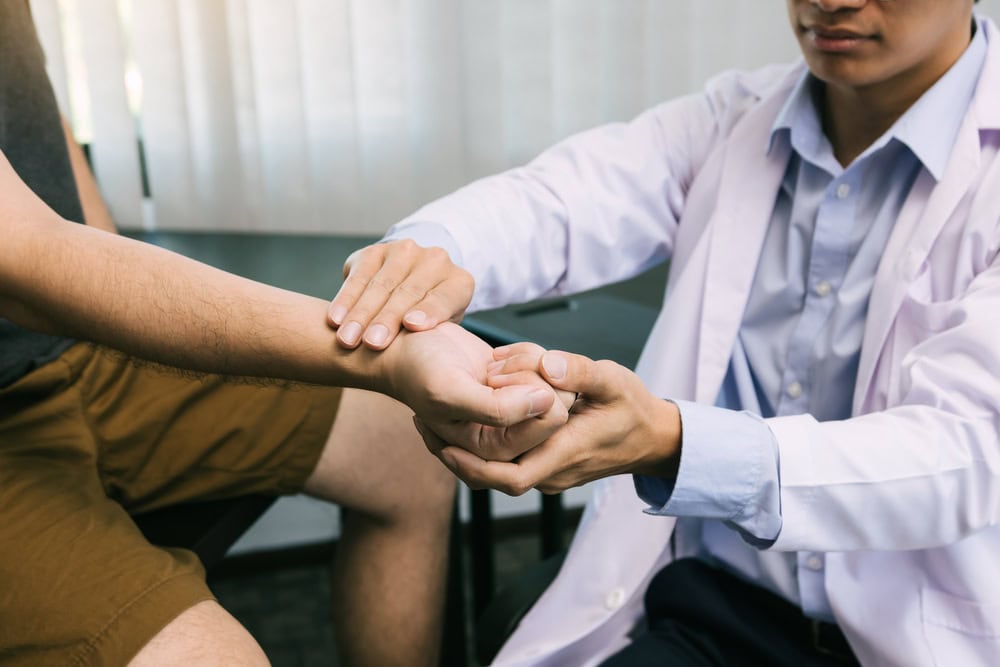
We assess thumb joint position, movement quality, ligament support, and muscle activation during pinch and grip. We also examine wrist and forearm mechanics, as poor support higher up the chain can increase demand on the thumb.
Functional tasks such as holding objects, writing, or lifting are observed to identify patterns that contribute to instability. This assessment allows us to explain what is happening and what needs to change.
Physiotherapy management for thumb joint instability
Management focuses on restoring active control and strength rather than relying solely on external support. The goal is a thumb that functions confidently during daily and higher-level tasks.
Improving joint positioning awareness
Early rehabilitation often focuses on improving awareness of thumb position. Many people unknowingly use the thumb in a collapsed or overloaded position. Through guided exercises and feedback, we help you learn how to position the thumb in a way that supports joint stability.
This awareness forms the foundation for all strengthening work.
Targeted strengthening for stability
Specific exercises are prescribed to strengthen the muscles that support the thumb joint, particularly those responsible for maintaining alignment during pinch and grip. Strengthening begins at low loads and progresses gradually to ensure the joint is protected.
Exercises are chosen to reflect real-life demands rather than isolated movements, improving transfer to daily activities.
Integrating wrist and forearm support
Thumb stability depends on the support of the wrist and forearm. Weakness or poor control in these areas can increase stress on the thumb joint. We address these regions to improve overall load distribution and reduce compensatory strain.
The role of splinting and taping
In some cases, temporary support such as splinting or taping may be used to reduce symptoms during higher-demand activities or in early rehabilitation. The purpose is to provide external stability while muscles are being retrained.
Support is used strategically and reviewed regularly. The aim is always to transition toward active stability rather than long-term dependence on braces or tape.
Activity modification without avoidance
Complete rest is rarely the solution for thumb instability. Instead, we guide you to modify how tasks are performed so the thumb is protected while remaining active.
Practical adjustments
This may include changing grip techniques, using the whole hand rather than relying on the thumb alone, adjusting tools or devices, and pacing repetitive tasks. For athletes and gym users, training modifications allow continued activity while stability is rebuilt.
What to expect during recovery
Improvement often begins with better control and reduced pain during daily tasks. Strength and endurance develop gradually as the joint adapts to increased load. Consistency with exercises and awareness during daily activities are key to success.
We track progress through changes in pain, strength, pinch control, and functional confidence. The plan is adjusted based on your response, ensuring progression remains safe and effective.
Preventing long-term joint issues
Unmanaged thumb joint instability can increase the risk of ongoing pain and degenerative changes over time. Early intervention focused on active stability helps protect the joint and maintain long-term hand function.
We also provide education on recognising early signs of fatigue or overload so adjustments can be made before symptoms escalate.
Take the next step
If thumb pain, weakness, or instability is limiting your confidence or performance, a structured assessment can clarify the cause and guide effective management. We will create a personalised plan focused on restoring control, strength, and dependable thumb function.
Conclusion: Thumb joint instability affects grip, precision, and confidence in daily hand use, but it responds well to targeted physiotherapy. By restoring active control, improving strength, and guiding safe progression, stability can be rebuilt without reliance on long-term support. A clear, evidence-based approach allows you to use your hand comfortably and confidently again.
