
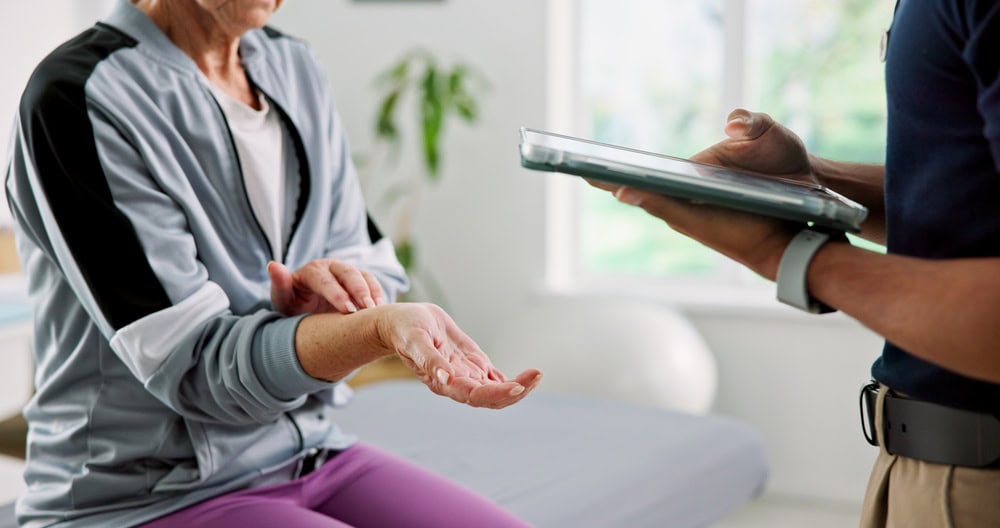
When hand pain or weakness improves but daily tasks still feel awkward, tiring, or unreliable, it is often because strength has not yet transferred into real-world function. Functional hand rehabilitation bridges the gap between basic exercises and confident use of your hand in everyday life. At Adam Vital Physiotherapy & Rehabilitation Center, our approach to Wrist & Hand Physiotherapy focuses on restoring movement, strength, and coordination in ways that directly match how you use your hands at work, at home, and during activity.
What functional hand rehabilitation means
Functional hand rehab goes beyond isolated movements such as squeezing a ball or moving individual fingers. It focuses on coordinated tasks that require the hand, wrist, forearm, and shoulder to work together under realistic loads.
The goal is not simply to make the hand stronger, but to make it reliable. This means being able to grip, release, lift, manipulate, and support weight without pain, hesitation, or loss of control.
When functional exercises are needed
Functional rehabilitation is particularly important after injury, surgery, prolonged pain, or periods of immobilisation. Even when pain has reduced and range of motion has improved, many people notice that tasks still feel difficult or unsafe.
Common signs functional rehab is required
You may notice early fatigue during everyday tasks, difficulty coordinating finger movements, weakness when lifting objects, or discomfort that appears only during complex activities rather than simple exercises. Athletes may feel strong in the clinic but struggle to return to sport-specific hand demands. Office workers may tolerate short tasks but flare with longer workdays.
Assessment guides exercise selection
Functional hand exercises are only effective when they match your specific needs. Before prescribing exercises, we assess how your hand behaves during real tasks.
What we assess
We observe grip patterns, wrist positioning, finger coordination, load tolerance, and how fatigue develops. We also look at how the shoulder and upper limb support hand function, as poor control higher up the chain often limits hand performance.
This allows us to select exercises that target the true limitation rather than repeating movements you can already do well.
Principles of functional hand rehabilitation
Functional exercises follow clear principles to ensure progress without flare-ups.
Task relevance
Exercises are chosen to resemble tasks you need to perform, such as lifting, carrying, gripping, twisting, or supporting weight. The closer an exercise matches your real demands, the better the transfer to daily life.
Progressive loading
Load is increased gradually. This may involve changing weight, duration, speed, or complexity. Progression is guided by symptom response, not by rushing to harder tasks.
Quality before quantity
Movement quality matters more than repetitions. Exercises are performed with controlled wrist positioning, coordinated finger movement, and relaxed but stable posture. Poor technique often increases strain rather than building capacity.
Foundational functional hand exercises
Early functional exercises aim to restore coordinated use of the hand under light to moderate load.
Grip and release tasks
Controlled gripping and releasing of objects of different sizes and textures helps restore coordination and endurance. This may include holding and placing items, transferring objects between hands, or controlled squeezing with timed release.
The focus is on smooth movement and relaxed control rather than maximal force.
Pinch and precision control
Pinch tasks involving the thumb and fingers improve fine motor control needed for writing, buttoning, and device use. Exercises may include picking up small objects, manipulating tools, or maintaining pinch under light load.
Progressive functional strengthening
As tolerance improves, exercises progress to more demanding tasks that build real-world strength.
Carrying and holding exercises
Carrying objects with proper wrist alignment builds endurance and grip stability. Load and duration are adjusted based on your goals, whether that is grocery carrying, work tasks, or sport preparation.
Lifting and lowering tasks
Controlled lifting and lowering helps the hand adapt to changing load. Emphasis is placed on smooth transitions, stable wrist positioning, and coordinated finger use rather than speed.
Weight-bearing through the hand
For those who need to support weight through the hands, such as during exercise, yoga, or floor transfers, graded weight-bearing is introduced. This begins with partial load and progresses as tolerance improves.
Coordination and endurance training
Many hand complaints are related to fatigue rather than raw strength. Functional rehab therefore includes endurance and coordination work.
Sustained task tolerance
Exercises that involve holding, gripping, or manipulating objects for longer periods help build endurance. This is essential for work tasks, prolonged typing, or caregiving activities.
Complex task sequencing
Combining multiple hand movements into a sequence improves coordination and reduces hesitation. This may include tasks that require grip changes, direction changes, or bilateral hand use.
Integrating wrist and shoulder support
The hand does not function in isolation. Weakness or poor control in the wrist and shoulder often increases demand on the fingers and thumb.
Upper limb integration
Exercises are often combined with wrist stability and shoulder control to improve force transfer. This reduces overload on the hand and improves efficiency during functional tasks.
How often to perform functional exercises
Functional exercises are typically performed three to five times per week, depending on intensity and symptoms. Some lighter tasks may be performed daily as part of normal activity, while heavier strengthening requires recovery time.
We provide clear guidance on frequency, progression, and how to adjust load if symptoms increase.
Signs exercises need modification
Mild muscular fatigue is expected, but sharp pain, increasing swelling, or symptoms that worsen over 24 hours indicate excessive load. In these cases, exercises should be reviewed and adjusted rather than pushed through.
Learning to interpret these signals is part of rehabilitation.
Transferring gains into daily life
The ultimate goal of functional hand rehab is confident use outside the clinic. We guide you on how to apply improved strength and control during work, home tasks, and activity so gains are maintained.
Education on pacing, technique, and recovery supports long-term success.
Take the next step
If your hand feels better but still struggles with real tasks, a structured functional rehabilitation program can help bridge the gap. We will assess your specific needs and guide you through exercises that restore dependable, pain-free hand use.
Conclusion: Functional hand rehabilitation exercises are essential for translating recovery into real-world performance. By focusing on task-specific movement, progressive loading, and coordinated control, these exercises restore confidence and reliability in daily hand use. With clear guidance and consistent practice, function can be rebuilt safely and effectively.
