
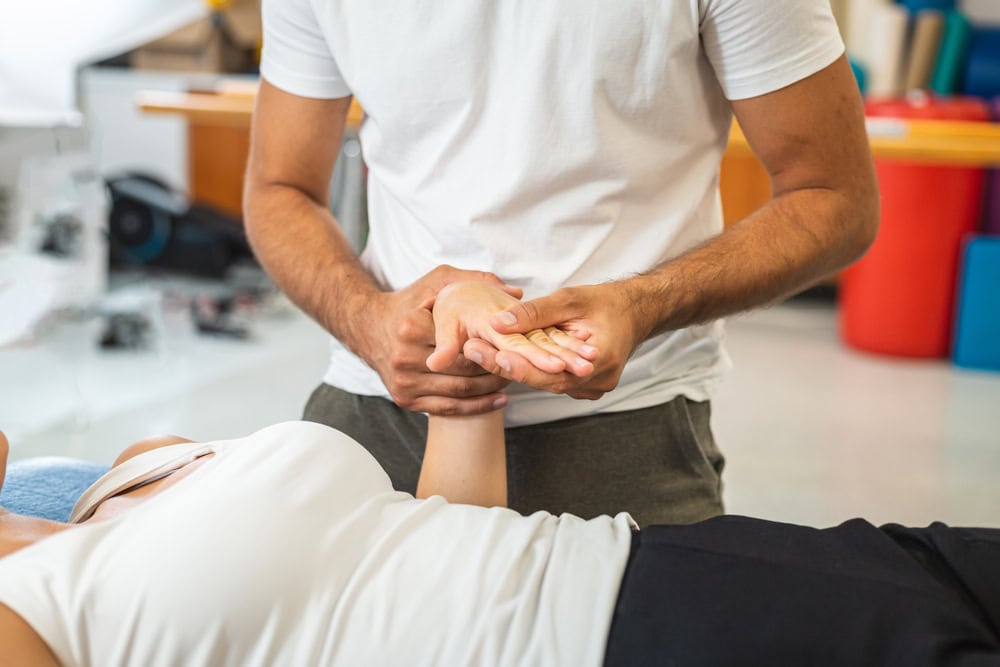
Tightness along the inside of the forearm and wrist can make gripping, typing, lifting, and weight-bearing through the hands feel uncomfortable or restricted. When wrist flexor muscles become tight, they increase strain on tendons and nerves and limit how smoothly the wrist and fingers can move. At Adam Vital Physiotherapy & Rehabilitation Center, our approach to Wrist & Hand Physiotherapy uses targeted stretching as part of a broader plan to restore movement quality, reduce pain, and support reliable hand function.
What the wrist flexors do
The wrist flexors are a group of muscles on the palm side of the forearm that help bend the wrist, grip objects, and stabilise the hand during lifting and fine motor tasks. These muscles are active in almost everything you do with your hands, from typing and scrolling to carrying bags or training in the gym.
Because they work frequently and often in sustained positions, wrist flexors are prone to becoming shortened and overactive. Over time, this tightness can restrict wrist extension, increase tendon load, and contribute to pain or nerve irritation.
Why wrist flexors become tight
Tight wrist flexors usually develop gradually. They are rarely the result of a single stretch being missed and more often reflect cumulative load without enough variation or recovery.
Common contributors
Prolonged typing or mouse use with the wrists held in flexion, frequent gripping tasks, gym training with heavy gripping, and repetitive manual work are common contributors. Stress and fatigue can also increase muscle tone, making tightness more noticeable during busy periods.
After injury or immobilisation, wrist flexors may tighten protectively, limiting movement even after pain settles. Without targeted stretching and movement retraining, this stiffness can persist.
Why stretching matters for recovery
When wrist flexors are tight, the wrist struggles to extend fully. This shifts load to other structures such as tendons, nerves, and joints. Stretching helps restore normal muscle length, allowing the wrist and fingers to move more freely and reducing unnecessary strain.
Stretching alone does not solve all wrist or hand problems, but when used correctly, it supports better movement, improved exercise tolerance, and more comfortable daily activity.
Assessment before stretching
Not all wrist pain benefits from aggressive stretching. Before prescribing stretches, we assess whether tightness is truly limiting movement or whether pain is driven by another factor.
What we assess
We assess wrist range of motion, muscle tone, pain response, nerve sensitivity, and how your wrist behaves during functional tasks. If nerve symptoms are present, stretching must be modified carefully. This ensures stretches support recovery rather than aggravating symptoms.
You will be guided on how far to stretch, how often, and what sensations are appropriate.
Principles of effective wrist flexor stretching
Stretching is most effective when performed with control and intention rather than force.
Key principles
Stretches should create a gentle to moderate pulling sensation in the forearm, not sharp pain in the wrist or hand. Breathing should remain relaxed, as holding breath often increases muscle tension. Stretching is more effective when performed regularly in shorter sessions rather than infrequently with high intensity.
Stretching should also be combined with movement and strengthening so gains are maintained.
Common stretches for tight wrist flexors
The following stretches are commonly used to improve wrist flexor flexibility. Not all stretches are suitable for everyone, and selection depends on your symptoms and tolerance.
Basic wrist extension stretch
With the elbow straight and the arm extended in front of you, gently pull the fingers back with the opposite hand, allowing the wrist to extend. You should feel a stretch along the inside of the forearm. Hold for 15 to 30 seconds while keeping the shoulder relaxed.
This stretch targets the main wrist flexor group and is often used as a starting point.
Wrist flexor stretch with elbow bent
Bending the elbow slightly during the stretch reduces nerve tension and isolates the muscle more gently. This variation is useful when straight-arm stretching feels too intense or when nerve sensitivity is present.
Finger-specific flexor stretch
Individual fingers can be gently extended to target specific flexor tendons. This is particularly useful when tightness is felt more in certain fingers during gripping or typing tasks.
Movements should be slow and controlled, stopping short of pain.
Weight-bearing stretch modification
For those who tolerate it, gentle weight-bearing through the hands on a table or wall can provide a functional stretch. The wrist is gradually extended while keeping load light and controlled. This approach mimics real-life demands and can improve tolerance when used carefully.
How long and how often to stretch
Wrist flexor stretches are typically held for 15 to 30 seconds and repeated two to four times. Most people benefit from stretching one to three times per day, particularly after prolonged activity or at the end of the workday.
Consistency matters more than duration. Short, regular stretching sessions are more effective than occasional long holds.
When stretching should be modified or paused
Stretching should not significantly increase pain, tingling, or numbness. If symptoms worsen during or after stretching, the range or frequency should be reduced.
Sharp pain, increasing nerve symptoms, or lingering soreness that lasts into the next day are signs that stretching needs review. In these cases, other strategies such as load modification or strengthening may take priority.
Combining stretching with strengthening
Stretching alone can temporarily improve flexibility, but long-term change requires strength and control. Tight wrist flexors are often paired with weak wrist extensors or reduced endurance.
Balanced rehabilitation
We typically combine stretching with exercises that strengthen opposing muscles and improve wrist stability. This balance helps maintain new range of motion and reduces the likelihood of tightness returning.
Movement quality is emphasised so the wrist learns to move efficiently during daily tasks.
Daily habits that support flexibility
Stretching is more effective when daily habits support recovery.
Practical strategies
Regular breaks from repetitive tasks, varying hand positions, reducing excessive grip force, and maintaining neutral wrist alignment during work all reduce cumulative strain. Gentle movement throughout the day keeps tissues hydrated and responsive.
For active individuals, adjusting training volume and grip demands helps prevent recurrent tightness.
What to expect with consistent stretching
Many people notice reduced stiffness and improved wrist extension within the first few weeks of consistent stretching. Pain may reduce gradually as movement becomes easier and load is distributed more evenly.
Progress depends on consistency and addressing contributing factors such as workload and posture. Stretching works best as part of a complete rehabilitation plan.
Take the next step
If tight wrist flexors are limiting your movement or contributing to pain, a structured assessment can determine which stretches are appropriate and how they should be combined with strengthening and activity guidance. We will tailor a plan that supports safe, lasting improvement.
Conclusion: Tight wrist flexors can restrict movement and increase strain on the hand and wrist, but targeted stretching can restore flexibility and comfort when applied correctly. By using controlled stretches, maintaining consistency, and pairing flexibility work with strengthening, wrist function can improve safely and sustainably. Clear guidance and a balanced approach support long-term hand health and confident daily use.
