
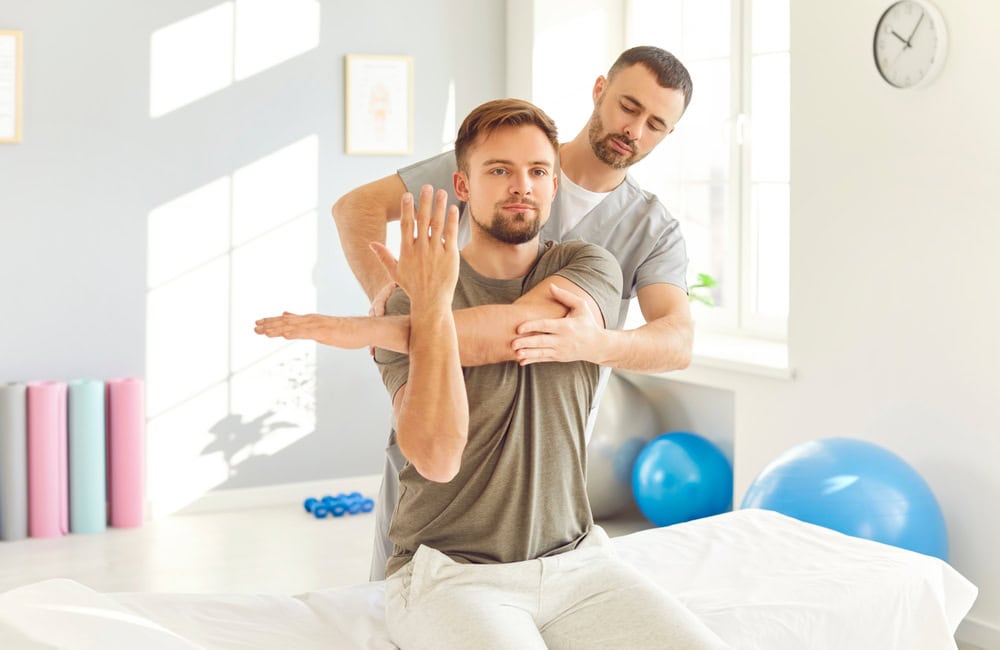
A shoulder dislocation can be sudden and alarming, often leaving you uncertain about movement, stability, and the risk of it happening again; a structured Shoulder Pain Treatment approach after dislocation focuses on restoring control, rebuilding strength, and reducing recurrence risk through a clear, progressive recovery plan.
Understanding a Shoulder Dislocation
A shoulder dislocation occurs when the upper arm bone is forced out of the shoulder socket. This most commonly happens in a forward direction and can occur during sport, a fall, or an unexpected impact. Beyond the immediate pain, a dislocation can stretch or damage the joint capsule, ligaments, labrum, and surrounding muscles, particularly the rotator cuff.
Even after the joint is relocated, the shoulder often feels unstable, weak, or apprehensive. This is because stability relies not only on bones, but also on soft tissue integrity and neuromuscular control. A structured recovery plan addresses these elements together rather than relying on rest alone.
Why a Recovery Plan Is Essential
After a dislocation, the risk of recurrence is highest if rehabilitation is incomplete or rushed. Simply waiting for pain to settle does not restore joint stability. Without targeted rehabilitation, the shoulder may compensate with poor movement patterns, increasing strain and instability during daily tasks or sport.
An effective recovery plan progresses through stages that respect tissue healing while restoring confidence and functional strength. The aim is to return you to activity with a shoulder that feels reliable, not fragile.
Initial Phase: Protection and Symptom Control
The early phase focuses on protecting healing tissues and reducing pain and swelling. Depending on the severity and associated injuries, short term immobilisation may be recommended. This phase is time limited and carefully monitored to prevent excessive stiffness.
Education is critical here. Understanding safe positions, how to manage daily activities, and how to sleep comfortably reduces anxiety and prevents accidental overload. Gentle, guided movements may be introduced to maintain circulation and prevent unnecessary loss of range.
Restoring Safe Shoulder Mobility
As pain settles and protective restrictions are lifted, rehabilitation shifts toward restoring controlled movement. The goal is not to regain full range immediately, but to reintroduce motion that respects healing structures.
Early mobility work focuses on smooth, pain free movement within safe ranges. This helps reduce stiffness and prepares the shoulder for strengthening. Progression is guided by comfort, quality of movement, and absence of post exercise flare ups.
Rebuilding Strength and Stability
Rotator Cuff Strengthening
The rotator cuff plays a key role in centring the shoulder joint during movement. After dislocation, these muscles often become inhibited or weak. Strengthening begins with low load, controlled exercises that emphasise endurance and coordination rather than force.
As control improves, resistance is increased gradually to build capacity for daily and sporting demands.
Scapular Control and Endurance
The shoulder blade provides a stable base for arm movement. Poor scapular control can increase instability and strain on the joint. Rehabilitation includes exercises that improve scapular positioning, timing, and endurance during reaching and lifting tasks.
This work supports efficient movement patterns and reduces the risk of re injury.
Neuromuscular Control and Proprioception
Dislocation can disrupt the shoulder’s sense of position and control. Proprioceptive training helps retrain the nervous system to respond appropriately to movement and load. This may include closed chain exercises, controlled weight shifts, and gradual exposure to unpredictable forces.
Improving neuromuscular control is essential for confidence and long term stability.
Progressing Toward Functional Use
As strength and control improve, rehabilitation becomes more functional. Exercises are selected to reflect your daily activities, work tasks, or sport specific demands. Load, speed, and range are increased systematically to ensure the shoulder can tolerate real world challenges.
This phase often reveals residual deficits that need refinement. Addressing these details reduces recurrence risk and supports durable recovery.
Return to Sport or High Demand Activity
Returning to sport or physically demanding work requires careful progression. Criteria based milestones are used rather than fixed timelines. These may include strength symmetry, movement quality, endurance, and tolerance to repeated loading.
Gradual reintroduction of sport specific drills allows the shoulder to adapt while confidence is rebuilt. Rushing this phase increases the likelihood of instability episodes.
Managing Fear and Confidence After Dislocation
Fear of re dislocation is common and can alter movement patterns subconsciously. Education and guided exposure help address this. Understanding what movements are safe and why allows you to move with greater assurance.
Confidence is treated as part of rehabilitation, not an afterthought. A shoulder that feels strong but untrusted is not fully recovered.
Common Questions About Shoulder Dislocation Recovery
How long does recovery take?
Recovery timelines vary based on severity, associated injuries, and activity demands. Many people regain basic function within weeks, but full return to sport or heavy activity may take several months.
Is surgery always required?
Not all dislocations require surgery. Assessment considers age, activity level, recurrence risk, and tissue damage. Many first time dislocations respond well to structured rehabilitation.
Can dislocation happen again?
Recurrence risk exists, particularly without rehabilitation. Strengthening, control training, and load management significantly reduce this risk.
Supporting Long Term Shoulder Health
Recovery does not end when pain resolves. Ongoing maintenance of shoulder strength, scapular control, and movement quality supports long term stability. Education on training load, recovery, and technique helps protect the shoulder over time.
Regular reassessment can identify early signs of overload before symptoms escalate.
Your Next Step
If you have experienced a shoulder dislocation and want to recover with confidence, an assessment provides clarity on stability, strength, and movement quality. From there, a structured plan supports safe progression back to daily life, work, and sport.
Conclusion
A shoulder dislocation recovery plan is most effective when it is structured, progressive, and tailored to your needs. By restoring mobility, rebuilding strength, and retraining control, rehabilitation reduces recurrence risk and supports confident movement. With clear guidance and consistent effort, most people return to activity with a shoulder that feels stable, strong, and reliable.
