
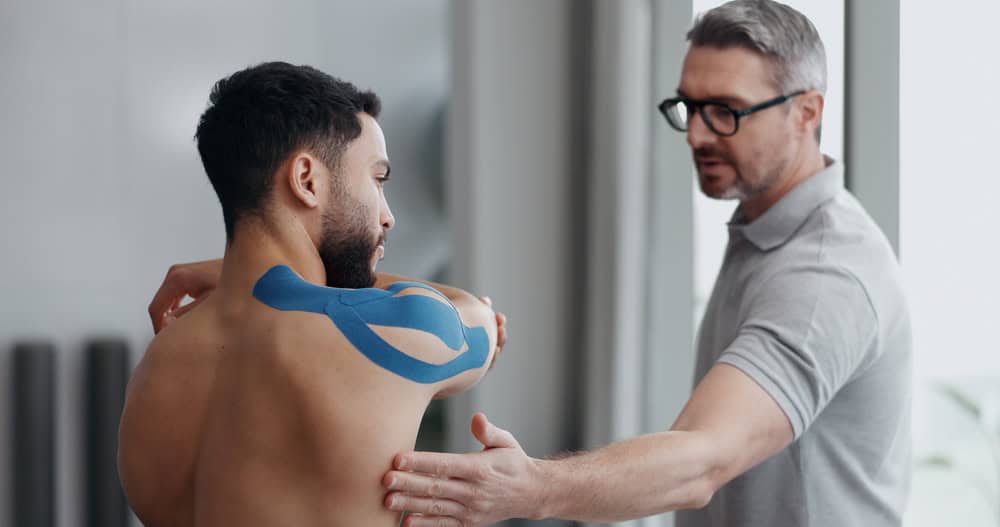
When shoulder pain or instability limits confidence during movement, taping can provide short term support and reassurance while rehabilitation progresses; as part of a broader Shoulder Pain Treatment plan, taping techniques are used to support movement quality, reduce symptom flare ups, and help you stay active without relying on rigid restriction.
What Shoulder Taping Is and Is Not
Shoulder taping involves applying adhesive tape to the skin in specific patterns to influence movement, provide sensory feedback, or offer light mechanical support. It is important to understand that taping does not fix structural problems or replace rehabilitation. Its role is supportive and temporary.
When used appropriately, taping can reduce discomfort during activity, improve movement awareness, and increase confidence. When used in isolation or for prolonged periods without active rehabilitation, its benefits are limited. The most effective use of taping is alongside exercises and education.
How Taping Can Help Shoulder Symptoms
Taping works through several mechanisms. It can provide proprioceptive feedback, helping the nervous system sense shoulder position more clearly. This often leads to improved movement control and reduced protective muscle tension.
In some cases, taping also offers gentle mechanical support, reducing excessive movement or load in sensitive ranges. This can be helpful during the early stages of recovery or during higher demand activities such as sport or long workdays.
Assessment Before Applying Tape
Effective taping starts with assessment. We identify the movements or positions that provoke symptoms, the direction of instability or strain, and how the shoulder blade and arm are moving together. This ensures tape is applied with a clear purpose rather than as a generic solution.
Different shoulder problems benefit from different taping strategies. A shoulder with instability requires a different approach to one with pain driven by poor scapular control or muscle fatigue.
Common Taping Techniques for Shoulder Support
Scapular Support Taping
Scapular taping is used to support shoulder blade positioning and movement. It does not force posture but provides feedback that encourages smoother control during arm elevation and daily tasks.
This technique is often helpful for people with shoulder fatigue, poor endurance, or discomfort during prolonged desk work or overhead activity. The tape reminds the body to move efficiently rather than holding a rigid position.
Rotator Cuff Support Taping
Rotator cuff taping aims to reduce strain on sensitive tendons during movement. It is commonly used in cases of rotator cuff related pain or early rehabilitation phases where load tolerance is still developing.
The tape supports the shoulder during lifting and reaching while allowing full movement. This can make exercises and daily tasks more comfortable as strength improves.
Stability and Anti Dislocation Taping
For shoulders that feel unstable or apprehensive, taping can provide a sense of security, particularly during sport or high demand activity. Stability taping is often used after dislocation or in cases of recurrent instability.
It is applied to support vulnerable ranges without fully restricting motion. This allows functional movement while reducing fear of sudden instability.
Pain Modulation Taping
Some taping techniques focus primarily on pain reduction rather than mechanical support. These are often lighter applications designed to reduce pain sensitivity through sensory input.
This approach can be useful in chronic shoulder pain or flare ups, helping to calm symptoms so movement and exercise remain possible.
When Taping Is Most Useful
Taping is particularly useful during early rehabilitation, return to activity phases, or periods of increased workload. It can also help during sport, long workdays, or travel when shoulder demands temporarily increase.
It is less useful as a long term standalone strategy. If symptoms only settle while taped and return immediately without it, this suggests underlying strength, control, or load tolerance still needs to be addressed.
How Long Should Tape Be Used
Tape is typically worn for short periods, ranging from a few hours to a few days, depending on skin tolerance and activity level. It should not be worn continuously for extended periods without review.
Skin health is important. Tape should be removed if irritation, itching, or discomfort develops. Proper application and removal reduce skin issues.
Taping and Exercise: Why They Work Best Together
Taping can make exercise more comfortable by reducing pain or improving movement awareness. This allows you to perform rehabilitation exercises with better quality and confidence.
As strength and control improve, reliance on tape should reduce. The goal is always independence, where your shoulder feels supported by its own capacity rather than external aids.
Common Questions About Shoulder Taping
Does taping weaken the shoulder?
No. When used appropriately and alongside exercise, taping does not weaken muscles. Over reliance without rehabilitation, however, may delay progress.
Can I tape my shoulder myself?
Some taping techniques can be taught for short term self use. However, initial assessment and guidance ensure the tape is applied correctly and for the right reason.
Is taping suitable for everyone?
Most people tolerate taping well, but it may not be suitable for those with skin sensitivities or allergies. Alternatives are always available.
What Improvement Should Feel Like
With effective taping, movement often feels more supported and less threatening. Pain during activity may reduce, and confidence may improve. These effects should complement ongoing rehabilitation rather than replace it.
If taping does not change symptoms at all, or symptoms worsen, the approach should be reviewed.
Your Next Step
If shoulder pain or instability is limiting your confidence during work, sport, or daily tasks, an assessment can determine whether taping would be helpful and how it should be integrated into your recovery plan.
Conclusion
Taping techniques for shoulder support are most effective when they are targeted, time limited, and combined with active rehabilitation. By improving movement awareness, reducing discomfort, and supporting confidence, taping can help you stay active while strength and control are rebuilt. Used correctly, it becomes a helpful tool within a clear, structured shoulder recovery strategy rather than a long term dependency.
