
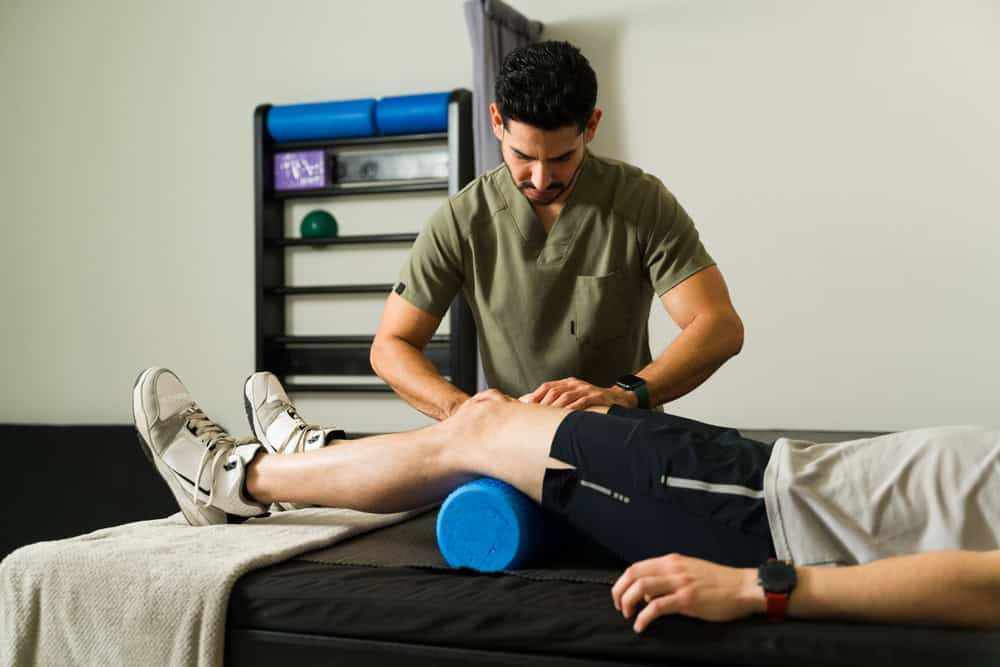
Knee pain often develops or persists not only because of what is happening inside the joint, but because of how you move through daily life. Walking is one of the most repeated movements your body performs, and even small inefficiencies can place repeated stress on the knee over time. Gait retraining focuses on improving how you walk so load is distributed more evenly and movement feels smoother, more stable, and less painful. As part of Knee Pain Physiotherapy, gait retraining is a practical, evidence based way to reduce symptoms and support long term knee health.
What gait retraining involves
Gait retraining is the process of analysing and refining walking mechanics to reduce unnecessary joint stress. It is not about forcing unnatural movements, but about restoring efficient patterns that your body can sustain comfortably. Changes are subtle, targeted, and guided by assessment rather than guesswork.
How walking patterns affect knee pain
Every step you take transfers force through the hip, knee, ankle, and foot. When this force is not absorbed or controlled well, the knee often becomes the overload point.
Excessive joint loading
Longer stride length, heavy heel striking, or limited knee bend during walking can increase impact forces through the knee. Over time, this repeated load can contribute to pain and irritation.
Poor alignment during stance
Inward knee movement during weight acceptance places extra stress on the joint surfaces and surrounding structures. This pattern is commonly linked to hip weakness or reduced control.
Reduced shock absorption
Limited ankle or hip movement can reduce the body’s ability to absorb force efficiently. When this happens, the knee compensates by taking on more load than it is designed to tolerate repeatedly.
Knee conditions that benefit from gait retraining
Gait retraining is relevant for a wide range of knee conditions where walking mechanics influence symptoms.
Patellofemoral and anterior knee pain
Subtle changes in step length, cadence, or knee position can significantly reduce pressure at the front of the knee and improve comfort during walking.
Knee osteoarthritis
Improving walking efficiency helps manage joint load and reduce pain flare ups. Small adjustments can make walking feel less effortful and more sustainable.
Post injury and post surgical recovery
After injury or surgery, protective walking patterns often linger even after tissues heal. Retraining helps restore confidence and normal movement.
Meniscus related knee pain
Reducing rotational stress and uneven loading during walking can decrease irritation and improve tolerance to daily activity.
Assessment as the foundation
Effective gait retraining begins with observation and analysis. Walking is assessed from multiple angles to identify patterns that may be contributing to symptoms. This assessment considers speed, stride, joint alignment, and how different joints share load.
Key elements commonly addressed in gait retraining
Not every individual needs the same changes. Interventions are chosen based on what will reduce stress most effectively for your knee.
Stride length and cadence
Slightly shortening step length or increasing cadence can reduce impact forces and knee joint load. These changes are often simple to apply and well tolerated.
Knee and hip alignment
Cues that encourage better thigh and knee positioning during stance help distribute forces more evenly and reduce excessive joint stress.
Foot placement and control
Foot position influences how force travels up the leg. Improving foot control or timing can support smoother knee motion and improved stability.
Trunk and posture awareness
Upper body posture affects lower limb mechanics. Small adjustments in trunk position can reduce knee load and improve overall walking efficiency.
How gait retraining is introduced
Changes are introduced gradually and reinforced through repetition. The goal is for new patterns to feel natural rather than forced.
Simple, clear cues
Verbal and visual cues help guide movement without overwhelming you. Only one or two focus points are used at a time to ensure clarity.
Short practice periods
Gait retraining is practiced in brief intervals initially. This allows the body to adapt without fatigue or frustration.
Integration with strengthening
Gait changes are supported by targeted strengthening of the hips, legs, and calves. Strength provides the foundation that makes new patterns sustainable.
What improvements typically feel like
Many people notice walking feels lighter, smoother, and less effortful. Knee discomfort during or after walking often reduces, and confidence in longer walks improves. These changes usually build gradually rather than overnight.
Why gait retraining supports long term outcomes
Walking is unavoidable in daily life. Improving how you walk reduces cumulative stress on the knee, supporting recovery and helping prevent recurrence. These benefits extend beyond symptom relief to improved movement confidence and independence.
Common concerns and reassurance
It is normal to worry that changing how you walk may feel awkward at first. This phase is temporary. With guidance and practice, the body adapts and the new pattern becomes automatic.
Your next step
If knee pain worsens with walking or limits your daily routine, gait retraining may be a key part of your recovery. A structured assessment can identify whether your walking pattern is contributing to symptoms and how small, targeted changes can reduce load. Book an assessment to begin a guided approach toward more comfortable, efficient walking and improved knee confidence.
