Restricted knee joint mobility can make everyday movements such as walking, bending, or climbing stairs feel stiff, uncomfortable, or unreliable. This limitation often develops after injury, surgery, swelling, or prolonged pain related movement avoidance. Manual therapy, when used as part of a structured physiotherapy plan, helps restore joint motion and improve comfort so movement becomes easier and more confident again. Within Knee Pain Physiotherapy, manual therapy is applied with clear intent, to improve how the knee moves and to support active rehabilitation.
Understanding knee joint mobility
Knee joint mobility refers to how smoothly and fully the knee can bend, straighten, and glide during movement. Healthy mobility allows forces to be distributed evenly across joint surfaces and surrounding tissues. When mobility is reduced, other structures compensate, often increasing pain, stiffness, and strain during daily activities.
Why knee mobility becomes restricted
Loss of knee mobility rarely happens without reason. It is usually the result of protective responses or tissue changes following stress to the joint.
Swelling and inflammation
Joint swelling limits movement both mechanically and neurologically. Fluid within the joint reduces available space for movement and inhibits muscle activation, particularly in the quadriceps, leading to stiffness and weakness.
Post injury or post surgical changes
After ligament injuries, meniscus injuries, or surgery, the body often restricts movement to protect healing tissue. Without guided rehabilitation, this protective stiffness can persist longer than necessary.
Pain related movement avoidance
When movement causes discomfort, people naturally avoid certain positions or ranges. Over time, this avoidance can lead to reduced joint glide and soft tissue flexibility.
Degenerative joint changes
In conditions such as knee osteoarthritis, changes in joint surfaces and surrounding tissues can reduce motion and increase stiffness, particularly after periods of rest.
The role of manual therapy
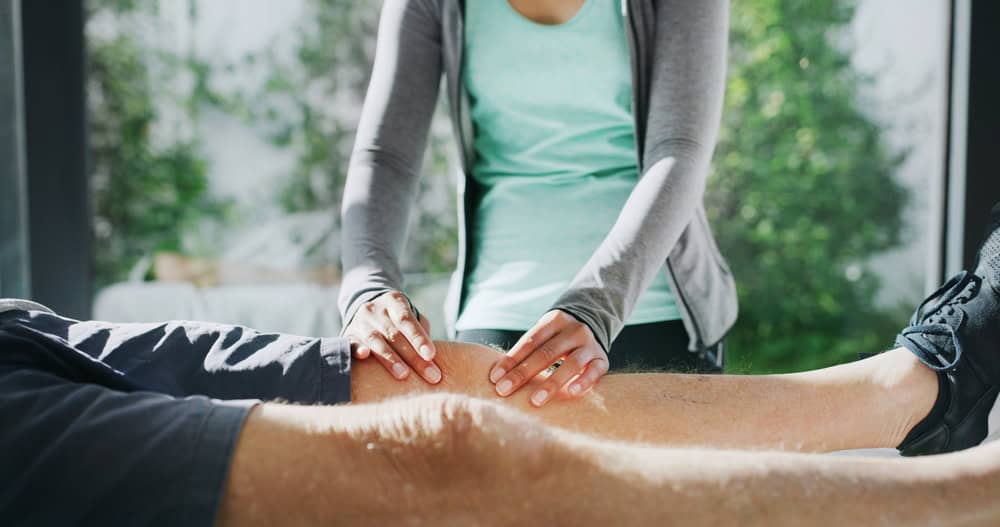
Manual therapy involves hands on techniques applied by a physiotherapist to improve joint and soft tissue mobility. These techniques are used to restore movement options and reduce discomfort, not as a standalone solution but as a facilitator for active rehabilitation.
Types of manual therapy used for the knee
Manual therapy techniques are selected based on assessment findings and symptom presentation.
Joint mobilisation techniques
Gentle, controlled movements applied to the knee joint help improve joint glide and reduce stiffness. These techniques aim to restore normal movement patterns and reduce discomfort associated with restricted motion.
Soft tissue techniques
Hands on treatment to muscles, tendons, and surrounding tissues can reduce tension and improve tissue flexibility. This supports smoother joint movement and prepares the knee for exercise.
Patellar mobilisation
The kneecap must glide efficiently for pain free knee movement. Targeted techniques can improve patellar mobility when restrictions contribute to anterior knee discomfort or stiffness.
How manual therapy supports recovery
Manual therapy creates short term improvements that make active rehabilitation more effective. It is not designed to replace exercise but to enhance the body’s ability to move and adapt.
Reducing pain to enable movement
By decreasing joint and tissue sensitivity, manual therapy can make movement more comfortable. This allows exercises to be performed with better quality and confidence.
Improving movement awareness
Hands on treatment provides sensory feedback that helps the nervous system reconnect with joint movement. This can improve coordination and reduce guarding.
Restoring confidence in range
When movement feels safer and less restricted, confidence increases. This psychological component is an important part of restoring normal function.
Manual therapy combined with exercise
The greatest benefits occur when manual therapy is integrated with active rehabilitation.
Reinforcing gains with movement
Any improvement in mobility achieved through hands on techniques is reinforced immediately through guided exercises. This helps the body maintain and build upon these gains.
Targeted strengthening in new ranges
Once mobility improves, strengthening exercises are introduced in the newly available range. This builds joint control and reduces the likelihood of stiffness returning.
Functional movement retraining
Improved joint mobility allows better movement patterns during tasks such as squatting, stepping, and walking. Retraining these movements reduces joint stress and supports long term progress.
What manual therapy feels like
Manual therapy should feel controlled and purposeful. You may experience mild discomfort or pressure, but sharp pain is avoided. Communication during treatment ensures techniques remain appropriate and effective.
Who benefits most from manual therapy
Manual therapy can be helpful for people experiencing post injury stiffness, post surgical restriction, osteoarthritis related stiffness, or pain limited movement. It is particularly valuable when mobility restrictions are preventing effective exercise progression.
Expected outcomes and timelines
Some people notice immediate improvement in movement ease following manual therapy, while others experience gradual change over several sessions. The duration and frequency depend on the cause of restriction and how the knee responds to combined treatment. Progress is measured by improved movement quality, reduced stiffness, and increased tolerance to activity.
Maintaining knee mobility long term
Long term mobility depends on continued movement, strength, and load management. Education around daily habits, activity pacing, and regular exercise helps maintain gains achieved through treatment.
Your next step
If knee stiffness or restricted movement is affecting your comfort or activity, a structured assessment can determine whether manual therapy will support your recovery. Combined with targeted exercise and clear guidance, it can help restore smoother movement and confidence. Book an assessment to begin a personalised approach to improving knee joint mobility.
