
Scoliosis is often discovered unexpectedly, during a routine check, a growth spurt, or when ongoing back discomfort or postural changes become hard to ignore, and understanding the different forms is a critical first step in effective Scoliosis Treatment, because the type and cause directly influence how the condition is managed and what outcomes you can expect.
Understanding what scoliosis actually is
Scoliosis is defined as an abnormal lateral curvature of the spine that typically appears as an S or C shape when viewed from behind, but it is more than a simple side bend, as the spine also rotates, affecting rib position, muscle balance, and overall biomechanics, which is why early identification and accurate diagnosis matter.
Idiopathic scoliosis
Idiopathic scoliosis is the most common type and means that no single underlying cause can be identified, even after proper medical evaluation, and it most frequently develops during periods of rapid growth.
Adolescent idiopathic scoliosis
This form usually appears between the ages of 10 and 18 and is often first noticed by parents or teachers who see uneven shoulders, an asymmetrical waistline, or a rib prominence when the child bends forward, and while many cases are mild, progression risk depends on growth stage, curve size, and skeletal maturity.
Adult idiopathic scoliosis
Some individuals carry idiopathic scoliosis into adulthood without knowing it, only becoming symptomatic later due to muscle fatigue, reduced spinal tolerance, or degenerative changes, and adults often present with persistent back pain, stiffness, or reduced activity capacity rather than visible deformity.
Congenital scoliosis
Congenital scoliosis results from spinal malformations that occur before birth, where vertebrae do not form properly or fail to separate, leading to structural curves that are present from infancy and may progress as the child grows.
How congenital scoliosis affects function
Because the curve is structural and often rigid, congenital scoliosis can impact spinal balance, movement patterns, and sometimes organ function depending on severity, making early diagnosis essential so progression can be monitored and supportive rehabilitation strategies introduced alongside medical oversight.
Neuromuscular scoliosis
Neuromuscular scoliosis develops as a secondary condition due to underlying neurological or muscular disorders that affect muscle control and spinal stability.
Common contributing conditions
Conditions such as cerebral palsy, muscular dystrophy, spinal cord injuries, or other neuromuscular disorders can lead to uneven muscle pull around the spine, causing curves that are often progressive and require close coordination between rehabilitation and medical teams.
Functional implications
In neuromuscular scoliosis, the primary concern is often sitting balance, mobility, respiratory efficiency, and comfort rather than cosmetic appearance, and physiotherapy focuses on maintaining function, reducing secondary complications, and supporting daily activities.
Degenerative scoliosis
Degenerative scoliosis typically develops later in life as a result of age-related changes in the spine, including disc degeneration, facet joint arthritis, and reduced spinal stability.
Why degeneration leads to curvature
As discs lose height and joints wear unevenly, the spine can gradually tilt and rotate, creating a curve that was not present earlier in life, often accompanied by localized pain, nerve irritation, or reduced walking tolerance.
Symptoms you may notice
Adults with degenerative scoliosis commonly report back pain that worsens with standing or walking, leg pain or numbness, and fatigue that limits daily tasks, making targeted assessment essential to differentiate scoliosis-related symptoms from other spinal conditions.
Functional and postural scoliosis
Not all scoliosis curves are structural, and functional or postural scoliosis occurs when the spine appears curved due to factors such as muscle imbalance, leg length discrepancy, or habitual posture rather than fixed vertebral changes.
Key differences from structural scoliosis
In functional scoliosis, the curve often reduces or resolves when the underlying cause is addressed, such as correcting pelvic alignment, improving movement control, or restoring muscle balance, highlighting the importance of a thorough assessment before labeling a curve as structural.
How scoliosis is diagnosed
Accurate diagnosis is not based on appearance alone, as effective management depends on understanding curve type, severity, flexibility, and functional impact.
Clinical assessment
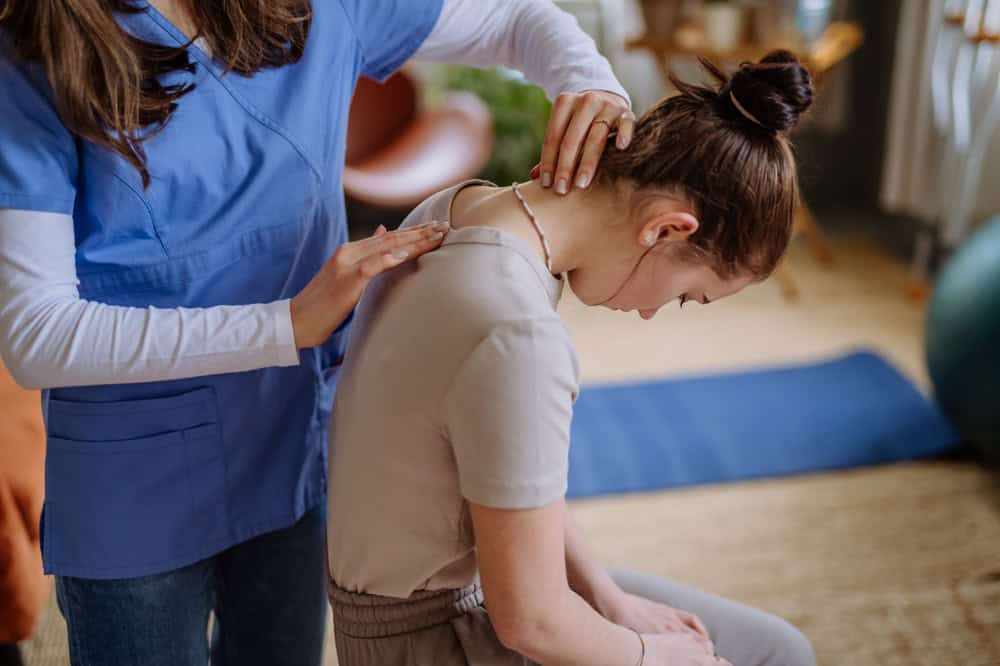
The diagnostic process typically begins with a detailed assessment of posture, spinal movement, muscle balance, and functional capacity, including observation from multiple angles and movement-based tests to understand how the spine behaves during daily activities.
Adam’s forward bend test
This simple screening test helps identify rib or lumbar prominence caused by spinal rotation, which can indicate a structural curve and guide further investigation.
Imaging and measurement
X-rays are used to confirm the diagnosis and measure the Cobb angle, which quantifies curve magnitude and helps determine severity, progression risk, and appropriate management strategies.
Monitoring progression
For growing adolescents or adults with progressive symptoms, periodic reassessment is important to track changes over time and adjust care plans accordingly, rather than relying on a single snapshot diagnosis.
Why accurate classification matters
Understanding the specific type of scoliosis allows care to be targeted, realistic, and outcome-focused, whether the goal is preventing progression, reducing pain, improving posture, or supporting long-term spinal health.
What to expect after diagnosis
Once scoliosis is identified and classified, the next step is developing a clear plan that considers your age, activity level, symptoms, and goals, with guidance on what can be improved, what should be monitored, and how progress will be measured.
If you or your child have been diagnosed with scoliosis or suspect spinal changes affecting comfort or movement, the most effective next step is to book a comprehensive assessment so the condition is clearly understood and managed with precision, support, and a plan that fits your life.
