
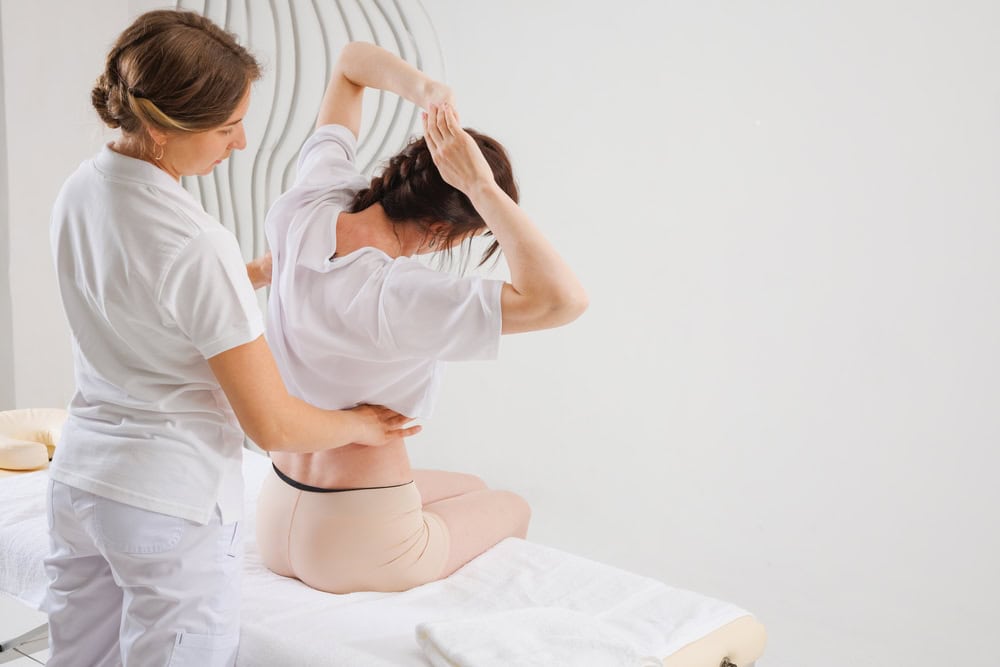
Living with a herniated disc can make even simple movements feel uncertain. Activities such as sitting, bending, or lifting may trigger pain that travels into the leg or arm, which often leads people to avoid movement altogether. While rest may seem helpful at first, long periods of inactivity can slow recovery and weaken the muscles that support the spine. At Adam Vital Physiotherapy & Rehabilitation Center, rehabilitation focuses on safe, structured movement that reduces nerve irritation while rebuilding strength and stability. For patients experiencing disc-related symptoms, our Disc Bulge & Disc Herniation Treatment approach combines precise assessment with targeted exercises designed to restore mobility, protect the injured disc, and support long-term spinal health.
Why Exercise Matters in Disc Recovery
Intervertebral discs respond to movement and mechanical load. Controlled exercise helps distribute pressure across the spine, improve circulation to spinal tissues, and strengthen the muscles that stabilise the back.
When exercises are carefully selected and performed correctly, they can reduce pressure on irritated nerves while gradually restoring normal spinal function.
The goal of rehabilitation is not simply to remove pain. The focus is on restoring movement quality, building resilience in the spine, and allowing patients to return to work, sport, and daily life with confidence.
Principles of Safe Exercise for Herniated Discs
Exercise selection for disc injuries must be guided by clinical assessment and symptom response. Certain movements may relieve symptoms, while others may increase pressure on the affected disc.
Stay Within a Comfortable Range
Exercises should be performed within a range that does not increase nerve symptoms. Mild muscular effort is expected, but sharp pain or increasing radiating symptoms should be avoided.
Focus on Controlled Movement
Slow and controlled movements allow the spine to adapt safely. Rapid or uncontrolled motions can increase stress on the injured disc.
Progress Gradually
Recovery from a disc injury takes time. Exercises are introduced in stages, beginning with gentle mobility and progressing toward strength and stability training.
Extension-Based Exercises
Many lumbar disc herniations respond positively to extension movements. These exercises gently arch the spine backward, which may help reduce pressure on the affected nerve root.
Prone Press-Ups
Prone press-ups are often used in early rehabilitation. The patient lies face down with hands placed beneath the shoulders and gently presses the upper body upward while the hips remain on the floor.
This movement encourages the spine to extend while maintaining support through the arms. The exercise is performed slowly and repeated several times, monitoring whether symptoms centralise or reduce.
Standing Back Extensions
Standing extensions can be useful during the day, particularly for people who sit for long periods. The hands are placed on the lower back while gently leaning backward within a comfortable range.
This movement helps counteract the forward bending posture commonly associated with prolonged sitting.
Core Stability Exercises
The muscles of the abdomen, pelvis, and lower back provide dynamic support for the spine. Strengthening these muscles helps distribute load more effectively and reduces stress on the discs.
Abdominal Bracing
Abdominal bracing is a foundational exercise that activates the deep core muscles. While lying on the back with knees bent, the patient gently tightens the abdominal muscles as if preparing for a light impact.
The spine remains in a neutral position while breathing continues normally. This activation builds awareness of spinal stability.
Bird Dog Exercise
The bird dog exercise strengthens the back and core while promoting balance and coordination. Starting on hands and knees, one arm and the opposite leg are extended slowly while maintaining a stable spine.
This exercise encourages the muscles that support the spine to work together without excessive spinal movement.
Pelvic and Hip Strengthening
The hips play a critical role in reducing load on the lumbar spine. When hip muscles are strong and coordinated, they assist with movement tasks such as lifting, walking, and climbing stairs.
Glute Bridges
Glute bridges strengthen the muscles of the hips and posterior chain. Lying on the back with knees bent, the patient lifts the hips while keeping the shoulders and feet on the floor.
This exercise promotes hip extension while maintaining spinal alignment.
Side-Lying Leg Raises
Side-lying leg raises strengthen the hip stabilisers, particularly the gluteus medius. These muscles support pelvic alignment during walking and standing.
Improved hip stability reduces compensatory strain on the lower back.
Gentle Mobility Exercises
Maintaining mobility in the spine and surrounding joints helps reduce stiffness and supports overall movement quality.
Knee-to-Chest Stretch
This gentle stretch helps reduce tension in the lower back and surrounding muscles. While lying on the back, one knee is drawn toward the chest while the other leg remains bent or extended.
The movement is performed slowly and held for a comfortable duration.
Cat-Camel Movement
The cat-camel exercise promotes controlled spinal mobility. Starting on hands and knees, the spine gently alternates between arching upward and lowering toward a neutral position.
This movement encourages flexibility while avoiding excessive loading.
Exercises to Approach with Caution
Not all exercises are appropriate during disc recovery. Certain movements may increase disc pressure and aggravate symptoms if performed too early.
Deep Forward Bending
Exercises that involve repeated forward bending can place increased stress on the posterior portion of the disc. These movements should be introduced gradually under professional guidance.
Heavy Lifting
Lifting heavy weights without proper technique can overload the spine. Strength training is often reintroduced later in rehabilitation once stability and control improve.
High-Impact Activities
Activities that involve jumping or sudden impact may increase spinal loading. These are usually postponed until strength and spinal tolerance improve.
The Role of Physiotherapy Guidance
Although many exercises appear simple, the effectiveness of rehabilitation depends on correct technique, appropriate progression, and careful monitoring of symptoms.
At Adam Vital Physiotherapy & Rehabilitation Center, physiotherapists begin with a detailed evaluation of spinal mobility, nerve function, posture, and muscular support. This assessment allows the rehabilitation program to be tailored to each patient.
Individualised Exercise Planning
Every disc injury is different. The exercises prescribed depend on the location of the herniation, the patient’s symptoms, and how the spine responds to movement.
Progressive Strength and Function
As symptoms improve, rehabilitation progresses toward functional movements such as lifting mechanics, balance training, and sport-specific conditioning.
This progression ensures that the spine can tolerate real-life activities safely.
Building Confidence in Movement
One of the most important aspects of recovery is restoring confidence in movement. Many people become cautious after experiencing nerve pain, which can lead to stiffness and muscle weakness.
Structured exercise provides a safe pathway back to normal activity. Gradual progress allows the spine to adapt while rebuilding strength and endurance.
Conclusion
Safe exercise plays a central role in recovering from a herniated disc. Controlled movement, targeted strengthening, and gradual progression help reduce nerve irritation while improving spinal stability and function.
With the right guidance, many patients regain mobility and return to their daily activities without ongoing limitations. A professional physiotherapy assessment helps ensure that exercises are appropriate for your condition and recovery stage. Taking this step allows rehabilitation to move forward with clarity, structure, and confidence.
