
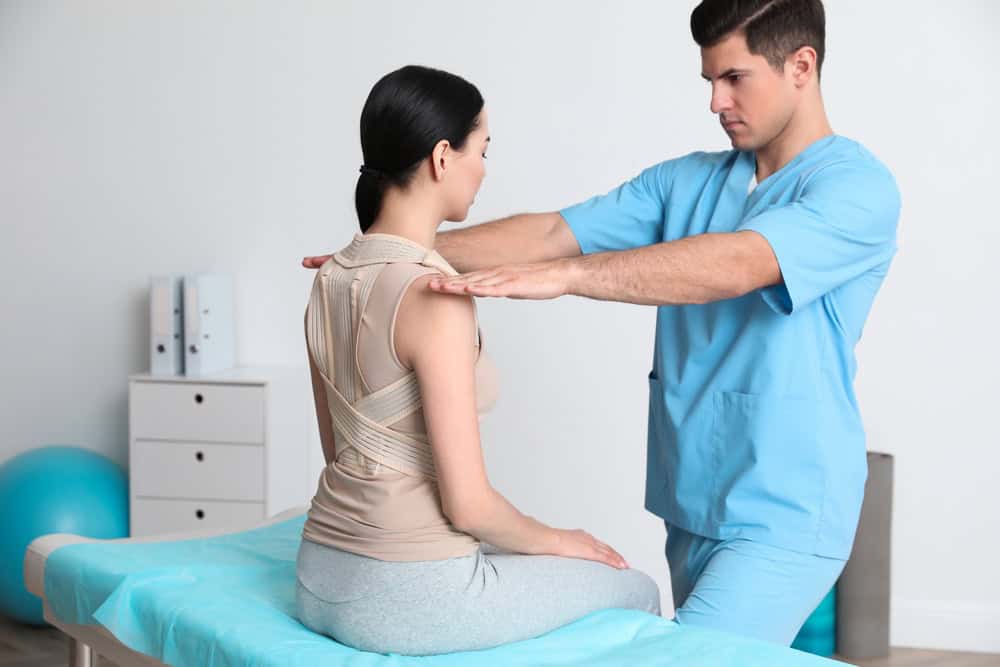
The spine is designed with natural curves that help distribute load, support movement, and maintain balance during everyday activity. When these curves become exaggerated, posture and movement efficiency can change. Kyphosis refers to excessive rounding of the upper back, while lordosis refers to an increased arch in the lower back. Both patterns may develop gradually through daily habits, muscle imbalances, or prolonged sitting. When left unaddressed, these changes can lead to stiffness, muscle fatigue, and discomfort during routine tasks. At Adam Vital Physiotherapy & Rehabilitation Center in Dubai, physiotherapy focuses on identifying the factors influencing spinal alignment and restoring balanced movement. Structured exercise programs are often a key part of Posture Correction / Postural Rehab, helping strengthen supporting muscles, improve spinal mobility, and guide the body back toward efficient posture.
Understanding Kyphosis and Lordosis
The spine naturally forms gentle curves that act as shock absorbers and support upright posture. The thoracic spine in the upper back curves slightly outward, while the lumbar spine in the lower back curves inward.
Kyphosis occurs when the thoracic curve becomes more pronounced than normal, causing the upper back to round forward. Lordosis occurs when the lumbar curve becomes exaggerated, creating a deeper arch in the lower back.
Both patterns are often influenced by muscle imbalance. Certain muscles become tight and overactive while others weaken and lose their stabilising role. Physiotherapy exercises aim to restore balance between these muscle groups and improve the body’s ability to maintain healthy alignment.
Common Causes of Spinal Curve Imbalances
Changes in spinal curvature typically develop gradually through a combination of lifestyle habits and muscular adaptations.
Prolonged Sitting
Extended periods of desk work often encourage slouched posture. Over time this can contribute to increased thoracic rounding and reduced activation of the upper back muscles.
Reduced Core Strength
The muscles that support the spine and pelvis play an important role in maintaining posture. Weakness in these stabilising muscles may allow the lumbar spine to arch excessively.
Limited Thoracic Mobility
When the upper back becomes stiff, the body may compensate by altering posture in the neck and lower back.
Muscle Tightness
Tight chest muscles, hip flexors, and lower back muscles can influence spinal alignment and reinforce postural changes.
Exercise Principles for Posture Correction
Exercises for kyphosis and lordosis aim to restore balance between mobility and stability. The goal is not to eliminate the natural curves of the spine but to bring them back within a healthy range.
Rehabilitation typically focuses on improving mobility where the spine has become stiff and strengthening muscles that support balanced posture.
Exercises are often performed slowly and with careful attention to alignment so that the body learns healthier movement patterns.
Exercises That Support Kyphosis Correction
When the upper back becomes excessively rounded, exercises focus on strengthening the upper back muscles and improving thoracic mobility.
Thoracic Extension Exercises
Thoracic extension movements help restore mobility to the upper spine. These exercises gently encourage the chest to open and the shoulders to move into a more balanced position.
Improving extension in the thoracic spine reduces the tendency for the upper back to remain rounded.
Scapular Strengthening
The muscles that stabilise the shoulder blades play a key role in upper back posture. Strengthening the middle and lower trapezius muscles helps position the shoulders more effectively.
Exercises that focus on controlled scapular movement help improve posture during both standing and sitting activities.
Chest Mobility Exercises
Tightness in the chest muscles can pull the shoulders forward and reinforce kyphotic posture. Gentle stretching and mobility exercises help restore balance between the front and back of the body.
Exercises That Support Lordosis Correction
When the lower back arch becomes exaggerated, exercises focus on improving pelvic control and strengthening the muscles that stabilise the lumbar spine.
Core Stabilisation Exercises
Strengthening the deep abdominal muscles helps support the spine and maintain a neutral pelvic position. These exercises improve the body’s ability to control spinal alignment during movement.
Glute Strengthening
The gluteal muscles contribute to pelvic stability and play a role in controlling the curvature of the lower back. Strengthening these muscles helps balance the forces acting on the pelvis.
Hip Flexor Mobility
Tight hip flexor muscles often contribute to excessive lumbar arching. Gentle stretching exercises help restore flexibility and reduce the forward pull on the pelvis.
Integrating Mobility and Strength
Effective posture correction requires both mobility and strength. Improving flexibility alone may not produce lasting change if stabilising muscles remain weak.
Similarly, strengthening exercises must be performed with proper alignment to ensure the spine maintains balanced curves during movement.
Physiotherapists often combine mobility exercises for the spine and hips with strengthening work for the core and upper back. This integrated approach supports long term postural improvement.
Daily Habits That Support Exercise Progress
Exercise programs are most effective when combined with adjustments to daily posture and activity habits.
Workstation Positioning
Ensuring that screens are positioned at an appropriate height and that the spine remains supported during desk work helps reduce stress on the upper and lower back.
Regular Movement Breaks
Standing, stretching, or walking briefly throughout the day prevents prolonged static postures that can reinforce spinal imbalances.
Postural Awareness
Developing awareness of how the body aligns during sitting, standing, and lifting helps reinforce the benefits of rehabilitation exercises.
What to Expect During Rehabilitation
Correcting exaggerated spinal curves takes time and consistency. Because the body has adapted to certain movement patterns over months or years, gradual retraining is required to restore balance.
Many patients begin to notice improvements in comfort and posture within several physiotherapy sessions as muscle activation improves and mobility increases. Continued progress depends on regular exercise and supportive daily habits.
The aim is to create a stable, flexible spine that can support both everyday activity and physical performance.
Conclusion
Kyphosis and lordosis represent changes in the natural curves of the spine that can influence posture, movement, and overall comfort. When these curves become exaggerated, muscle imbalances and reduced mobility often develop.
Targeted physiotherapy exercises can help restore spinal balance by improving mobility in restricted areas and strengthening the muscles that support proper alignment. At Adam Vital Physiotherapy & Rehabilitation Center, rehabilitation programs focus on structured assessment, evidence based exercises, and practical guidance that supports long term improvement. If posture related discomfort or spinal fatigue is affecting your daily life, booking a physiotherapy assessment is the first step toward restoring balanced posture and confident movement.
